

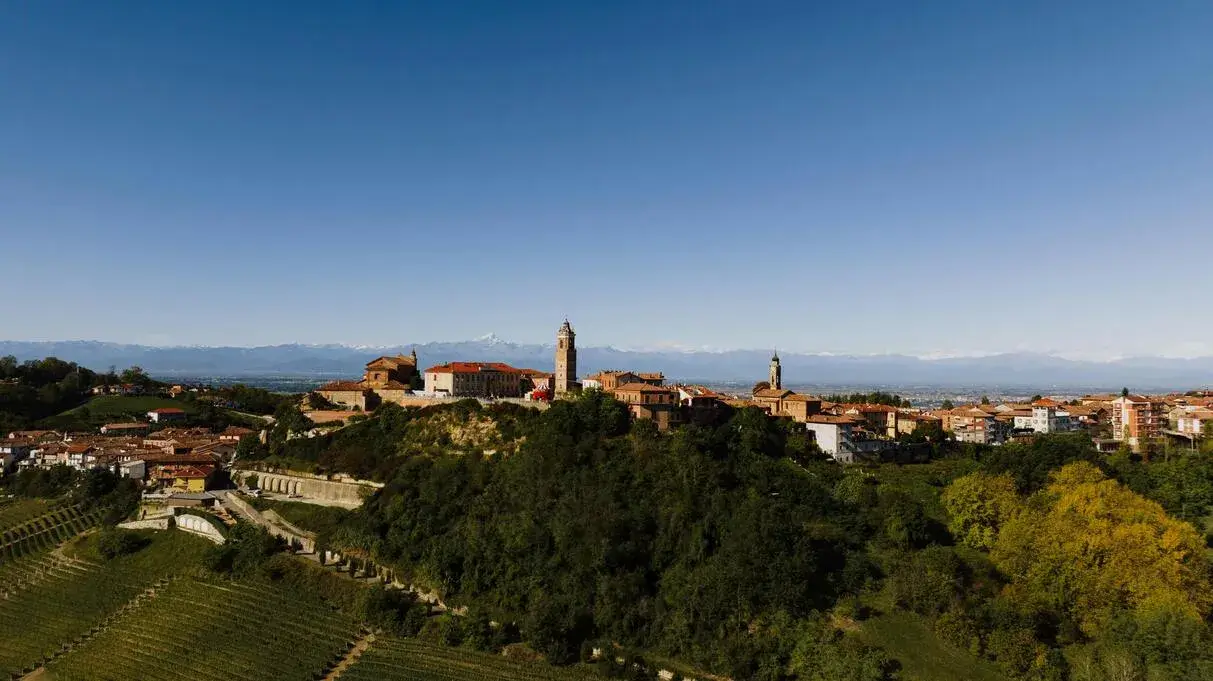
The best wine tour from Milan depends on what you like in the glass and how long you want to sit in the car. For sparkling wine with the shortest drive, choose Franciacorta or the Oltrepò Pavese, about an hour away; for big, age-worthy reds, Barolo and the Langhe or Amarone country in Valpolicella, around two hours; for a crisp white and a relaxed lunch, Gavi. Whichever you pick, a private car means nobody in the group has to drive after the tastings.
Wine and food day trips from Milan at a glance
| Region | Wine or food style | Drive from Milan | Tour length | From, per car |
|---|---|---|---|---|
| Franciacorta | Traditional-method sparkling (Chardonnay, Pinot Noir) | about 1 hour | 8 hours | €600 (E) / €680 (V) |
| Oltrepò Pavese | Pinot Noir sparkling, Cruasé, Bonarda | about 1 hour | 8 hours | €600 (E) / €680 (V) |
| Gavi | Dry white from Cortese | about 1 h 15 | 8 hours | €675 (E) / €765 (V) |
| Alba | White truffle, Nebbiolo, Barbaresco | 1 h 45 to 2 h | 8 hours | €830 (E) / €935 (V) |
| Asti & Monferrato | Barbera, Moscato, Asti sparkling | about 1 h 30 | 10 hours | €900 (E) / €1,015 (V) |
| Barolo & the Langhe | Nebbiolo: Barolo and Barbaresco | about 2 hours | 10 hours | €960 (E) / €1,080 (V) |
| Amarone & Valpolicella | Amarone, Ripasso, Recioto | about 1 h 50 | 10 hours | €945 (E) / €1,065 (V) |
| Parma | Parmigiano Reggiano, Prosciutto di Parma | 1 h 20 to 1 h 30 | 10 hours | €920 (E) / €1,040 (V) |
| Modena | Traditional balsamic vinegar, Lambrusco | 1 h 45 to 2 h | 10 hours | €995 (E) / €1,120 (V) |
Prices are per vehicle, not per person: E is a Mercedes E-Class for up to 2 guests, V a Mercedes V-Class for up to 6. Weekends are +20%, major holidays +50%, and extra hours cost €75 (E) or €85 (V). Winery, dairy and acetaia visits are booked in advance and paid directly to the producers; they are not included.
Franciacorta: Italy's sparkling wine, an hour away
Franciacorta is a small patch of hills and villages between Brescia and the southern shore of Lake Iseo. Its wine is made like Champagne, with the second fermentation in the bottle, mainly from Chardonnay and Pinot Noir, and even the non-vintage wines rest at least 18 months on the lees.
A typical day is two cellars, each with a tour and a tasting of Brut, Satèn and Rosé, and lunch in between: try manzo all'olio, beef slow-cooked in olive oil, a speciality of Rovato. At the end, a coffee by the water in Iseo or Clusane. Because it is so close, this is the easiest private Franciacorta wine tour from Milan.
Oltrepò Pavese: Pinot Noir country south of the Po
The Oltrepò is the hilly triangle of the province of Pavia that rises from the Po towards the Apennines. It has more Pinot Noir than anywhere else in Italy, and the best reasons to come are the Oltrepò Pavese Metodo Classico and its rosé version, Cruasé. Lunch at an agriturismo means salame di Varzi, agnolotti and a bottle of Bonarda or Buttafuoco.
The wine villages are about an hour from the city; the Oltrepò Pavese wine tour is the most unhurried day on this list. On the way home, the Certosa di Pavia and its carved marble façade sit just off the road; check opening times for your date.
Gavi: Piedmont's great white wine
Most of Piedmont's famous wines are red. Gavi is the exception: a dry, fresh white made only from Cortese, in eleven communes around the village of Gavi. Once Genoese territory, it still eats Ligurian-style: ravioli, vegetable pies, focaccia. Above the village stands the Forte di Gavi, a state museum whose opening days vary, so check before you go.
At about 1 hour 15 minutes on the A7, a Gavi wine tour from Milan leaves plenty of time for two tastings and a long lunch. The day can also finish in Genoa or on the Riviera.
Alba and the white truffle
Alba, a brick-built town on the Tanaro, is in autumn and early winter the capital of the white truffle, Tuber magnatum, which is gathered wild, never farmed. The International White Truffle Fair runs on autumn weekends, but dates and the quality of the season change every year.
On an Alba white truffle day trip you can walk the truffle market, eat tajarin with truffle shaved at the table and, by reservation, follow a trifolau and his dog into the woods for an hour or so.
Barolo and the Langhe: the king of Italian reds
Barolo is a village of a few hundred people with one of the most famous names in wine. The steep, vine-striped hills around it, part of a UNESCO World Heritage site since 2014, are where Nebbiolo makes Barolo and Barbaresco. Expect the WiMu wine museum in the Falletti castle, the view from La Morra and agnolotti del plin for lunch.
At about two hours each way, the Barolo and Langhe day trip from Milan is a 10-hour day. Two villages and two tastings is a comfortable maximum.
Asti and the Monferrato: Barbera, Moscato and underground cellars
The Monferrato is the gentler, quieter half of Piedmont's wine country. It is Barbera land, and around Canelli the home of Moscato d'Asti and Asti Spumante. Two of its sights are underground: the infernot, small chambers hand-dug into the soft sandstone around Cella Monte to keep the best bottles, and the "underground cathedrals" of Canelli where sparkling wines age in vaulted tunnels.
The Asti and Monferrato wine tour is a loop of around 280 km: out through Casale, then the medieval towers of Asti, lunch with braised beef in Barbera, and a Canelli cellar before heading home.
Amarone and Valpolicella: wine from dried grapes
Just north-west of Verona, the Valpolicella makes one of Italy's most distinctive reds. For Amarone, the best bunches of Corvina, Corvinone and Rondinella are laid out to dry in lofts called fruttai, typically for around four months, before pressing. The result is deep, warm and often 15% or more, which is exactly why it is good that nobody has to drive.
An Amarone and Valpolicella wine tasting tour typically tastes from Valpolicella and Ripasso up to Amarone and sometimes sweet Recioto, with risotto all'Amarone for lunch. To see grapes actually drying, come between the harvest and roughly late January or February.
Parma: Parmigiano Reggiano and Prosciutto
Not a wine day, but the natural partner to one. Parmigiano Reggiano is made every morning in small dairies, so the Parma food tour from Milan leaves around 7:15 to watch the cheesemakers lift the new wheels from the copper vats. Then a Prosciutto di Parma producer near Langhirano, lunch with a glass of Lambrusco, and an afternoon in Parma's old town.
Modena: traditional balsamic vinegar
Aceto Balsamico Tradizionale di Modena DOP is aged for at least 12 or 25 years in batteries of small casks, often in family attics. On a Modena balsamic vinegar day trip you taste young and old vinegars at an acetaia and walk the UNESCO-listed Piazza Grande; car lovers can add the Ferrari museums in Modena or Maranello.
How to choose
Sparkling, big reds or whites?
- Sparkling: Franciacorta for polished Chardonnay and Pinot Noir bubbles; the Oltrepò for Pinot Noir and Cruasé; Canelli for Moscato and Asti.
- Big reds: Barolo and Barbaresco in the Langhe, or Amarone in Valpolicella.
- Whites: Gavi, with a Ligurian-leaning lunch to match.
Short day or full day?
Franciacorta, the Oltrepò and Gavi are about an hour or a little more each way and fit an 8-hour package with time to spare. Barolo, Valpolicella, the Monferrato, Parma and Modena are 10-hour days.
Truffle season
If you travel in autumn, Alba is the obvious pick. Book restaurants and truffle hunts early, and check the fair dates before you go.
Planning tips
- Book the cellars first. Most estates in every region on this page receive visitors by appointment only, and popular ones fill up in spring and autumn. Tell us your dates early and we can help you book; weekdays are often easier.
- Two cellars a day is the sweet spot. A cellar tour with a tasting usually takes an hour and a half to two hours. Three is possible on the closer routes with shorter visits.
- Bringing bottles home. Cases travel safely in the boot back to your hotel. Many producers can ship abroad, but rules and costs depend on your country, so ask the winery and check before you go.
- Drink responsibly. Use the spittoon and drink water. Not driving is a reason to enjoy the wine, not to overdo it.
- Know what the driver does. Your English-speaking driver is not a licensed tour guide and does not guide inside wineries or monuments, but he knows these roads well and can recommend wineries, restaurants and practical tips. A licensed guide can be booked on request.
All our day trips are tailor-made: you can mix Parma in the morning with Modena in the afternoon, end in Verona or Genoa, or add Lake Iseo. For more ideas beyond wine, see all our day trips from Milan.
FAQ
Which wine region is closest to Milan?
The Oltrepò Pavese and Franciacorta, both about an hour's drive. They fit comfortably into an 8-hour day with two cellar visits and lunch.
Are winery tastings included in the price?
No. Winery, dairy and acetaia visits are booked in advance and paid directly to the producers. We can help you choose and book them.
How much does a private wine tour from Milan cost?
From €600 per car for Franciacorta or the Oltrepò with an E-Class (up to 2 guests), up to €1,120 for a Modena day with a V-Class (up to 6). Prices are per vehicle; weekends +20%, major holidays +50%.
Can we visit Barolo and Alba on the same day?
Yes. Alba is about 20 minutes from Barolo. With the long drive from Milan, two villages and two tastings is a comfortable maximum; more stops need extra hours.
When is the best time for a wine tour from Milan?
Autumn brings the harvest and, in Alba, the white truffle, but it is the busiest season. Spring and early summer are quieter and greener. Many family wineries close for holidays in August, so book ahead.
Can the tour start or end somewhere other than Milan?
Yes. Days can start from Malpensa or Linate and end in Turin, Verona, Genoa, Bologna or at a hotel in the Langhe or on Lake Garda. We confirm the price when you book.
